
What Nobody Else Could See
Paul Rohling, MSW, LCSW
Published
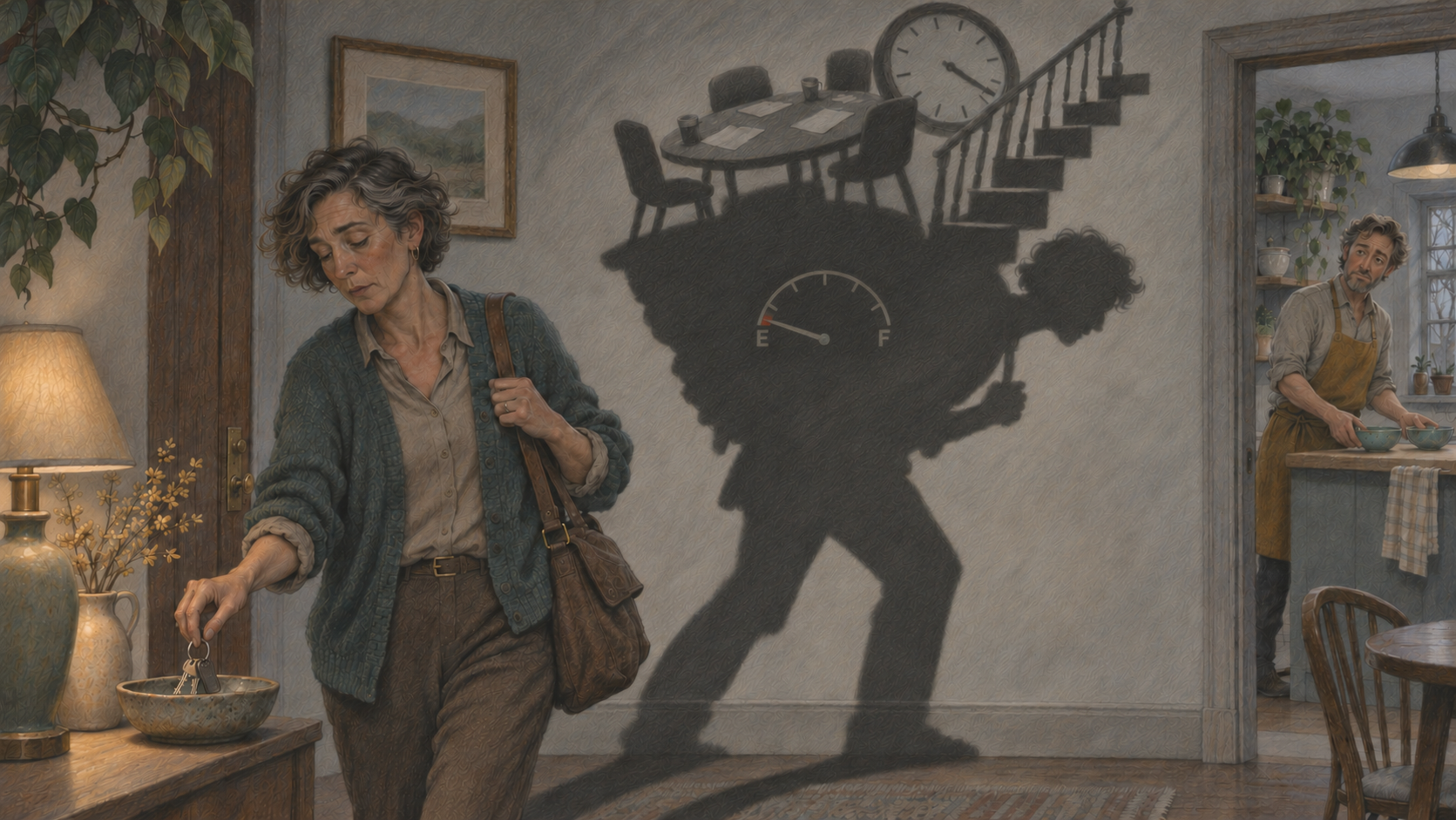
Imagine coming home after a day you seem to have handled reasonably well. You answered questions, followed conversations, finished enough of what needed doing. When someone asked how things were going, you said, “Fine.”
Then someone asks what you want for dinner, and you can barely tolerate the question. You hear the edge in your own voice. Now, along with being exhausted, you feel bad about how you’re treating someone you love.
From the outside, the reaction seems out of proportion to the request. But the request arrived at the end of a day that other people saw only in pieces.
We tend to notice whether someone got through something. They went to school. They attended the meeting. They stayed for the family gathering. Those observations tell us something. They leave out what the person had to do internally to remain there.
For someone with ADHD or other neurodivergent experiences, an ordinary activity can have a second job running underneath it. Following a conversation might mean filtering background noise, holding onto a thought until there’s an opening, and catching your attention wandering before anyone else notices. The conversation is already asking more of you than anyone can see.
Then there is the effort of looking as though all of this is going smoothly. You smile while trying to reconstruct instructions. You agree before you’ve had time to consider the request. You watch everyone else for clues about what you were supposed to understand.
This is part of what I mean by masking: managing how you are perceived while trying to function. That effort is hard to see precisely because the person is working so hard to keep it out of view.
In my work, I want to make room for a question that often gets overlooked: What is this costing you?
The answer can change our understanding of the difficulty. A student’s reluctance to enter a classroom may involve the work waiting inside, but it may also involve arriving late, having everyone turn toward them, and needing to explain where they’ve been. Helping with the assignment addresses one part of that. The doorway may need attention too.
Part of what makes a doorway expensive is what you’ve come to expect on the other side. Think of the adult in a meeting who has lost the thread. Asking would help. But if past questions have drawn an impatient sigh or a joke at their expense, asking now carries a second cost: deciding whether the help is worth the exposure.
This is what I think of as orientation strain: working out what’s expected, where you’ve lost your footing, and how to find your way back in. Masking adds another demand: doing all of that without anyone noticing. Someone else sees a quiet colleague or a blank page. The person is busy figuring out how to begin.
Expectations like these can come from many places: neurodevelopment, hard experience, present conditions, or all three at once. Lori Hogenkamp’s article, “Is It ADHD or Complex Trauma? What If We Are Asking the Wrong Question?”, offers a framework for thinking about how those strands might interact. They’re worth telling apart, because they call for different kinds of care. We can take someone’s distress seriously while staying careful about what we call it.
That gives us something practical to work with. A teacher might quietly point to the first step and check back a few minutes later. A student returning after an absence might know ahead of time where to go and who will meet them. Someone overwhelmed in a conversation might say, “I want to understand this. Can we come back to it after I’ve had a little time?”
Each response makes the next step more accessible, and then we can watch what happens. Does the person begin? Can they stay involved? Is there room for another question? Their response tells us how to adjust.
There’s room for responsibility here too. If exhaustion comes out as irritability toward a partner or child, repair matters. Understanding the strain can help you make a better plan for the next evening, including how to ask for a pause before frustration spills over.
The same curiosity belongs in how we understand ourselves. If you regularly reach the end of an ordinary day with little left, look closely at the day. Where were you concentrating hardest? When did you need clarification but stay quiet? What did you agree to before checking whether you had room for it?
You may find a place where a clearer expectation, a different arrangement, or an honest conversation could help. You may also find something that deserves more sustained support.
So, alongside “How was your day?” there might be room for another question:
What took the most effort today that nobody else could see?